
Beyond compliance: How external quality assessment drives laboratory improvement over time
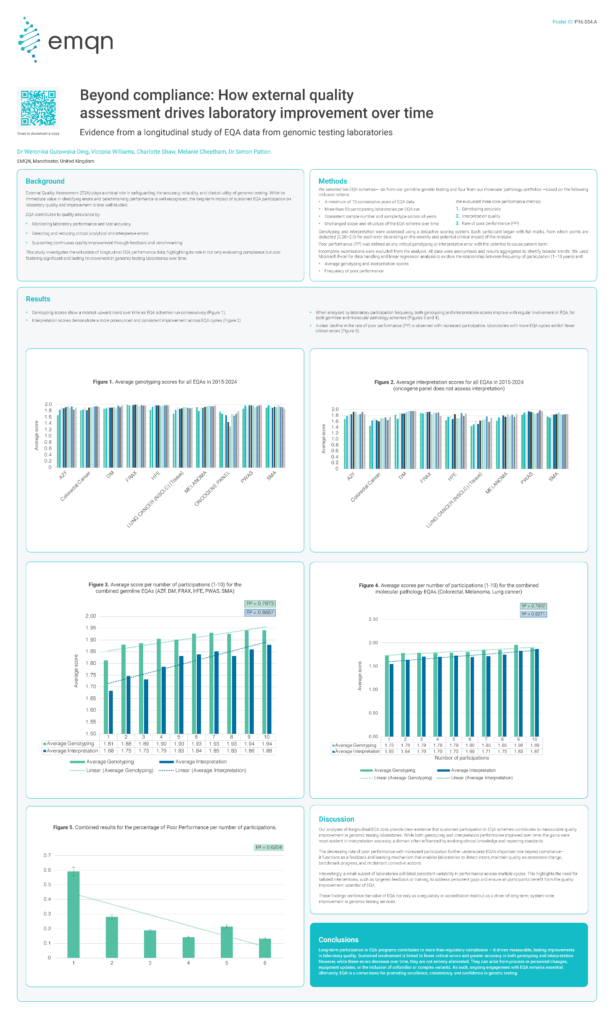
External Quality Assessment (EQA) plays a critical role in safeguarding the accuracy, reliability, and clinical utility of genomic testing. While its immediate value in identifying errors and benchmarking performance is well recognized, the long-term impact of sustained EQA participation on laboratory quality and improvement is less well studied. EQA contributes to quality assurance by:• Monitoring […]
Learnings from five years of External Quality Assessment (EQA) for porphyrias
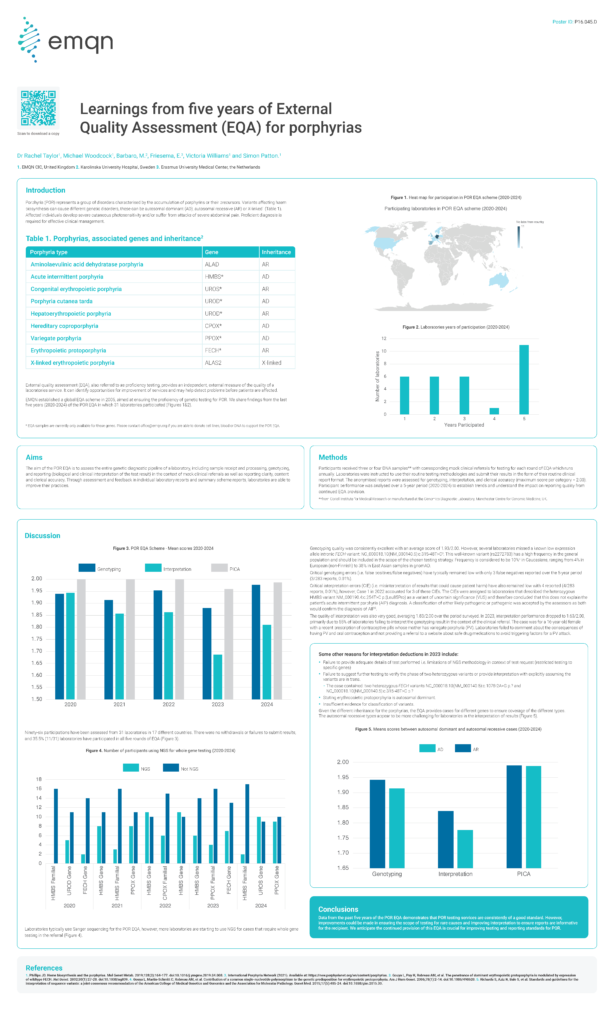
The aim of the POR EQA is to assess the entire genetic diagnostic pipeline of a laboratory, including sample receipt and processing, genotyping,and reporting (biological and clinical interpretation of the test result) in the context of mock clinical referrals as well as reporting clarity, contentand clerical accuracy. Through assessment and feedback in individual laboratory reports […]
External Quality Assessment for hereditary amyloidosis: Assuring test standards to support the identification of patients eligible for treatment
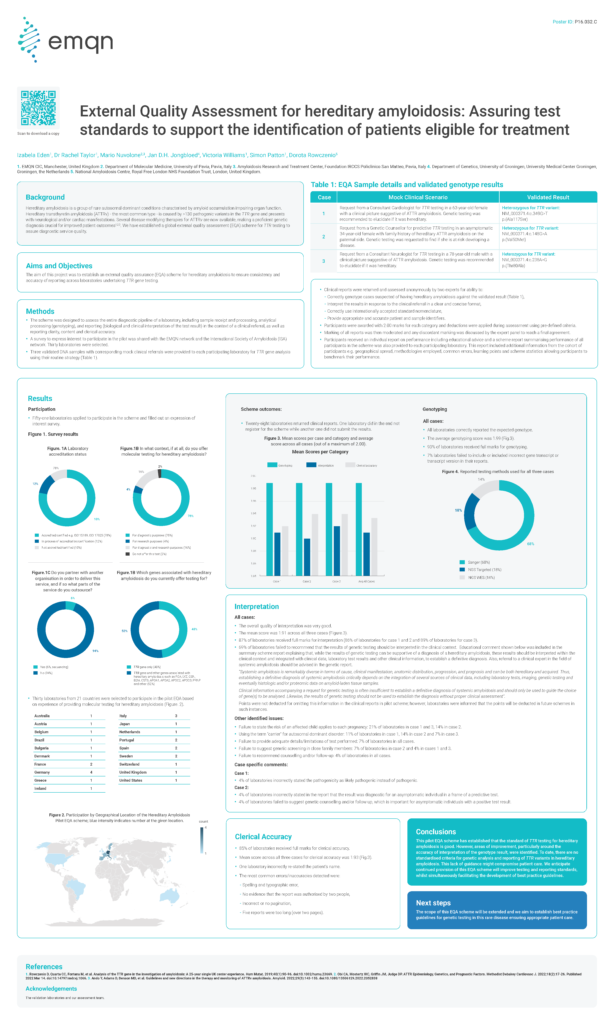
Hereditary amyloidosis is a group of rare autosomal dominant conditions characterised by amyloid accumulation impairing organ function. Hereditary transthyretin amyloidosis (ATTRv) – the most common type – is caused by >130 pathogenic variants in the TTR gene and presents with neurological and/or cardiac manifestations. Several disease modifying therapies for ATTRv are now available, making a […]